Guide
How to Blind Bake a Pie Crust (Times & Temp)
This page contains affiliate links – if you buy through them we may earn a commission, at no extra cost to you. The recommendations are our own assessment. As an Amazon Associate we earn from qualifying purchases.
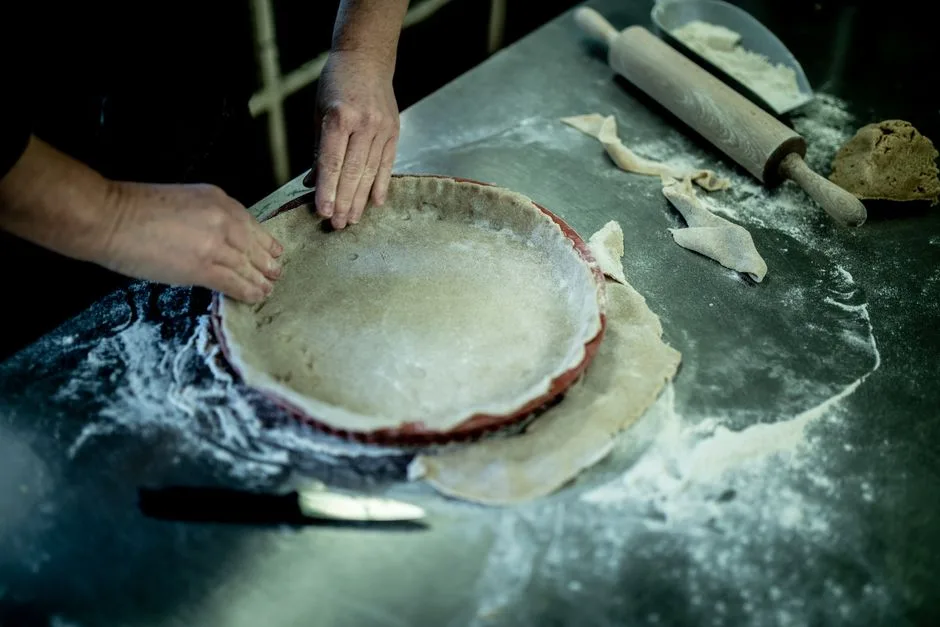
Blind baking means baking a pie crust before you add the filling. You do it whenever the filling is no-bake (like cream or chiffon pies) or when the filling cooks faster than the crust would (like custard or quiche). Pre-baking prevents the dreaded soggy bottom and sets the shape so the sides do not slump. The two versions you will use are a partial bake, where the crust is set but pale so it can finish with the filling, and a full bake, where the crust is cooked through and golden because the filling never sees the oven.
How to use this guide
Pick partial or full based on your recipe, then read across the table for temperature, weighted time, and uncovered time. Always start with a well-chilled, docked crust and use pie weights (or dried beans/rice) for the first stage so the sides hold. Treat the times as starting points and judge by color: pale and dry-looking for partial, evenly golden for full. Ovens run hot or cold, so check early and rotate the pan halfway.
| Type | Oven temp | With weights | Without weights | Approx. total | Doneness cue |
|---|---|---|---|---|---|
| Partial (par-baked) | 375-400°F (190-205°C) | 15-18 min | 5-7 min | 20-25 min | Set, dry, still pale |
| Full (fully baked) | 375-400°F (190-205°C) | 15-18 min | 15-22 min | 30-40 min | Evenly golden brown |
| Blind bake with egg wash seal | 375°F (190°C) | As above | Brush base with beaten egg; bake 2-3 min more | +2-3 min | Shiny, sealed base |
- Chill the shaped crust in the pan for at least 30 minutes (or freeze 15) before baking so the fat is cold and the sides hold their shape.
- Dock the base by pricking it all over with a fork to let steam escape and reduce puffing (skip docking if you will pour in a very liquid filling and rely on weights instead).
- Line snugly with parchment or foil and fill to the top with pie weights, dried beans, or rice so the sides are supported.
- Shield the edges with a pie shield or a ring of foil if the rim browns faster than the base.
- Remove the weights only after the sides look set and dry, then return the crust uncovered to finish and color the base.
- Cool a fully baked crust completely before adding a no-bake filling so it stays crisp.
- For custard or quiche, brush the warm par-baked base with beaten egg and bake 2-3 minutes to seal against leaks.
What temperature is best for blind baking?
Most crusts blind bake well at 375-400°F (190-205°C). 400°F sets the fat quickly for crisp results, while 375°F browns more gently and is forgiving. Butter-heavy doughs do best around 375-390°F (190-199°C) to avoid over-darkening the edges.
Do I really need pie weights?
For the first stage, yes. Weights hold the sides up and keep the base flat while the crust sets. Dried beans, rice, or granulated sugar all work as substitutes. Once the crust is set and dry, remove the weights so the base can dry out and brown.
How do I keep the crust from shrinking?
Chill the shaped crust before baking, do not stretch the dough into the pan, and leave a little overhang. Cold fat and a rested dough relax the gluten so the sides stay tall instead of sliding down.
Should I dock the crust or use weights?
Use both for most recipes: dock for steam release and weights for shape. If you are pouring in a thin, liquid filling and worry about leaks, skip docking and rely on weights plus an egg-wash seal so there are no holes for filling to seep through.
Can I blind bake a crust for a chicken pot pie or savory quiche?
Yes, par-bake the bottom crust so it does not go soggy under the filling. Note that blind baking only sets the crust; any chicken or poultry filling must reach a safe internal temperature of 165°F (74°C) during the final bake.
Related guides