Guide
How Long to Bake Bacon in the Oven
This page contains affiliate links – if you buy through them we may earn a commission, at no extra cost to you. The recommendations are our own assessment. As an Amazon Associate we earn from qualifying purchases.
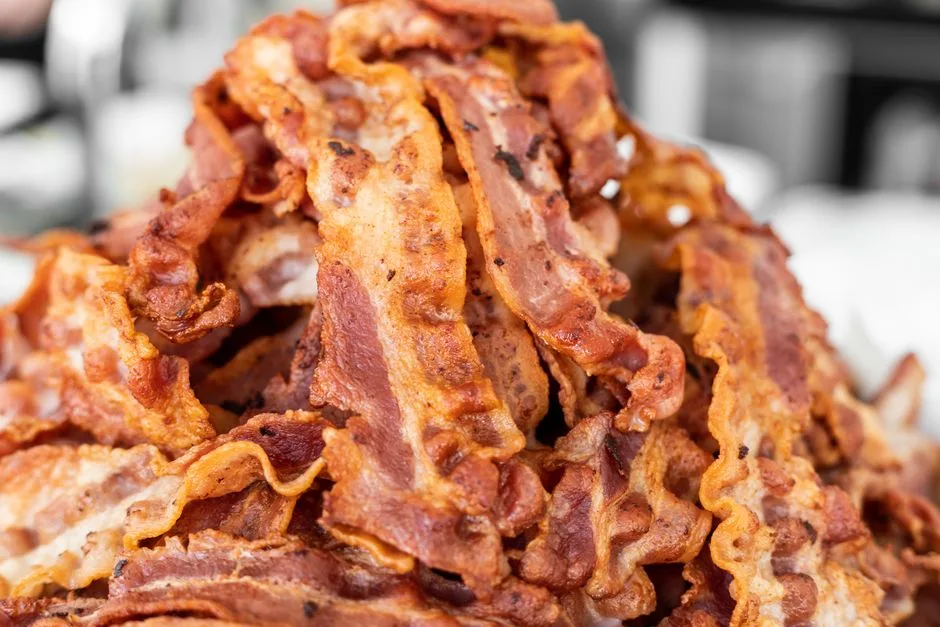
Baking bacon in the oven is the easiest way to cook several strips at once with even results and far less splatter than a skillet. The oven's steady, all-around heat renders the fat gently and browns each strip from edge to edge, so you get flat, crisp bacon without standing over a hot pan. Set your oven to 400°F (205°C), lay the strips on a lined, rimmed baking sheet, and let the oven do the work. The main variable is thickness: thin, standard-cut bacon crisps in about 12 to 16 minutes, while thick-cut needs closer to 16 to 20 minutes. Every oven runs a little differently, so start checking early until you learn how yours behaves.
How to use this chart
Find your bacon's cut in the table below and use the listed range as a starting point at 400°F (205°C). Pull the bacon a shade before it looks fully done, because it keeps crisping as it cools on the pan. If you like it chewy, aim for the low end of the range; for shatter-crisp bacon, go toward the high end. Ovens, pans, and even the brand of bacon all affect timing, so treat these numbers as a reliable guide rather than an exact clock.
Tips for the best oven bacon
- Line the pan with aluminum foil or parchment paper for near-effortless cleanup.
- Always use a rimmed, half-sheet baking pan (not a flat cookie sheet) so hot grease can't run off the edge.
- Arrange strips in a single layer with no overlap; crowded bacon steams instead of crisping.
- No need to flip; the oven browns both sides evenly, and leaving the strips undisturbed keeps them flat.
- For extra-crisp, drier bacon, set an oven-safe wire rack inside the pan so the fat drips away.
- Transfer finished bacon to a paper-towel-lined plate to drain.
- Let the leftover grease cool and firm up in the pan before you handle or discard it.
Grease safety is the one thing to respect with this method. A rimmed pan keeps the hot fat contained, but never carry a pan of liquid grease across the kitchen while it is still sloshing. Let it cool until it solidifies, then scrape it into a heatproof container or the trash. Never pour bacon grease down the drain, since it hardens in the pipes and causes clogs. If you want to save it for cooking, strain the cooled fat into a sealable jar and keep it in the refrigerator.
Frequently asked questions
Do I need to preheat the oven?
You can, but you don't have to. Starting bacon in a cold oven that heats up with the pan inside renders the fat gradually and can give very even, flat strips. If you preheat to 400°F (205°C) first, the bacon simply cooks a couple of minutes faster, so start checking early.
Do I have to flip the bacon?
No. The oven surrounds the strips with heat and browns both sides, so flipping isn't needed. Leaving the bacon undisturbed also keeps the strips flatter and easier to handle.
How do I know when the bacon is done?
Cook bacon to the crispness you prefer rather than to a set internal temperature. It looks slightly underdone when you pull it and firms up as it cools, so remove it about a minute early. By contrast, poultry such as chicken must reach a safe 165°F (74°C); bacon is cured and cooked to taste, but always wash your hands and surfaces after handling any raw pork.
What's the best way to get bacon extra crispy?
Use thick-cut bacon on an oven-safe wire rack set inside the rimmed pan, and bake toward the high end of the time range. The rack lets rendered fat drip away so the strips crisp instead of frying in a pool of grease.
Can I bake bacon at a higher temperature?
Yes. Many cooks use 425°F (220°C) to shave a few minutes off, but thin bacon can go from perfect to burnt very quickly at higher heat. 400°F (205°C) is the most forgiving all-purpose setting.
| Bacon cut | Approx. bake time | What to watch for |
|---|---|---|
| Thin / standard cut | 12-16 min | Crisps quickly; check at 12 min so it doesn't overcook |
| Thick cut | 16-20 min | Start checking at 16 min; add time for extra crunch |
| Extra-thick / butcher cut | 20-22 min | Rotate the pan once for even browning |
Related guides